I’ve Been Building Campbase for 30 Years.
I just didn’t know it until recently.
I was an awful student growing up. A real underperformer. Every few years, I would give my parents a pretty good scare. Sixth grade was a particularly tough adjustment for me, and ninth grade was something closer to a nightmare. Once I had access to middle school sports, my attention turned almost entirely to the fields and courts. By the time I got to high school and had the opportunity to play on varsity teams, most of what I thought about during the school day was getting out to practice. I had terrible study habits and very little discipline in the classroom. And I certainly couldn’t blame the education I was getting. I went to a terrific school and was surrounded by wonderful teachers. I just wasn’t particularly motivated.
The irony is that I actually liked learning.
My mother was an artist, and my parents loved to see and collect art. Despite my best efforts to appear disinterested as a kid being dragged around to galleries and exhibitions, I developed a genuine appreciation for art that has stayed with me throughout my life. I wish now that I had retained more of what I was exposed to during those years. I was fascinated by architecture and loved building things. As far as I was concerned, LEGO was one of the greatest inventions in the history of civilization. I loved storytelling and didn’t even mind writing, although I wasn’t particularly fond of the reading that was supposed to go along with it. And I was fascinated by technology.
Of course, technology in the 1970s and ‘80s meant something quite different. Some of it was imaginary, like Dick Tracy’s video watch or just about everything on The Jetsons. Some of it was very real, like those early personal computers that started appearing in our classrooms. I was interested in all of it.

My academic performance didn’t improve much when I got to college. In fact, the same pattern that had emerged in sixth and ninth grades repeated itself, only this time it resulted in my actually having to take some time away from school rather than just being threatened with it. But something interesting happened when I entered the working world. When there was a practical reason to learn something, and particularly when learning it would allow me to create something or solve a problem, I could become pretty consumed by it.
“The irony is that I actually liked learning.”
My first computer
In one of my first real jobs, working for a nonprofit organization, I eventually found myself responsible for running an office. Sitting in that office was an Apple Macintosh. My previous experience with computers consisted primarily of a few school assignments, some unsuccessful attempts to learn how to type properly (I still can’t), and playing Risk on a friend’s computer in his college dorm room.
But now I had to figure out how to do payroll, manage information, and create schedules for our staff. I learned how to use a computer because I had no choice. What surprised me was how naturally it came to me and how much I enjoyed figuring things out.
When laptops became affordable enough for me to justify spending an irresponsible amount of money on one, I bought myself a Toshiba Satellite. And in 1994, when I landed my first professional job in the summer camp business at Pinemere Camp, I brought it with me.
The year-round camp office consisted of about one and a half employees and was essentially devoid of technology. We didn’t even have a conventional copy machine. It took me months to convince our director, Bob Miner, that we probably needed a computer and an email address to function as a business. I was also trying to convince him that we should invest in something called EZ-CAMP, an early camp management software product that was still running on DOS.
In the meantime, I brought my laptop to work every day. I’m pretty sure Bob thought I was an idiot.
At some point, I purchased Microsoft Office and discovered Access, its database application. I started teaching myself how to use it. Tables, queries, forms, reports. I kept messing around with it until, eventually, I had built a database containing all of our camper records.
Our bookkeeper was still maintaining our accounts receivable on manila cards, typing information onto them with a typewriter. In a remarkable display of operational efficiency, I would then take much of that same information and enter it into my database. But I could generate reports, create bunk lists, produce mailing labels, and organize information in ways we hadn’t been able to before.
Bob was not nearly as impressed by any of this as I was.
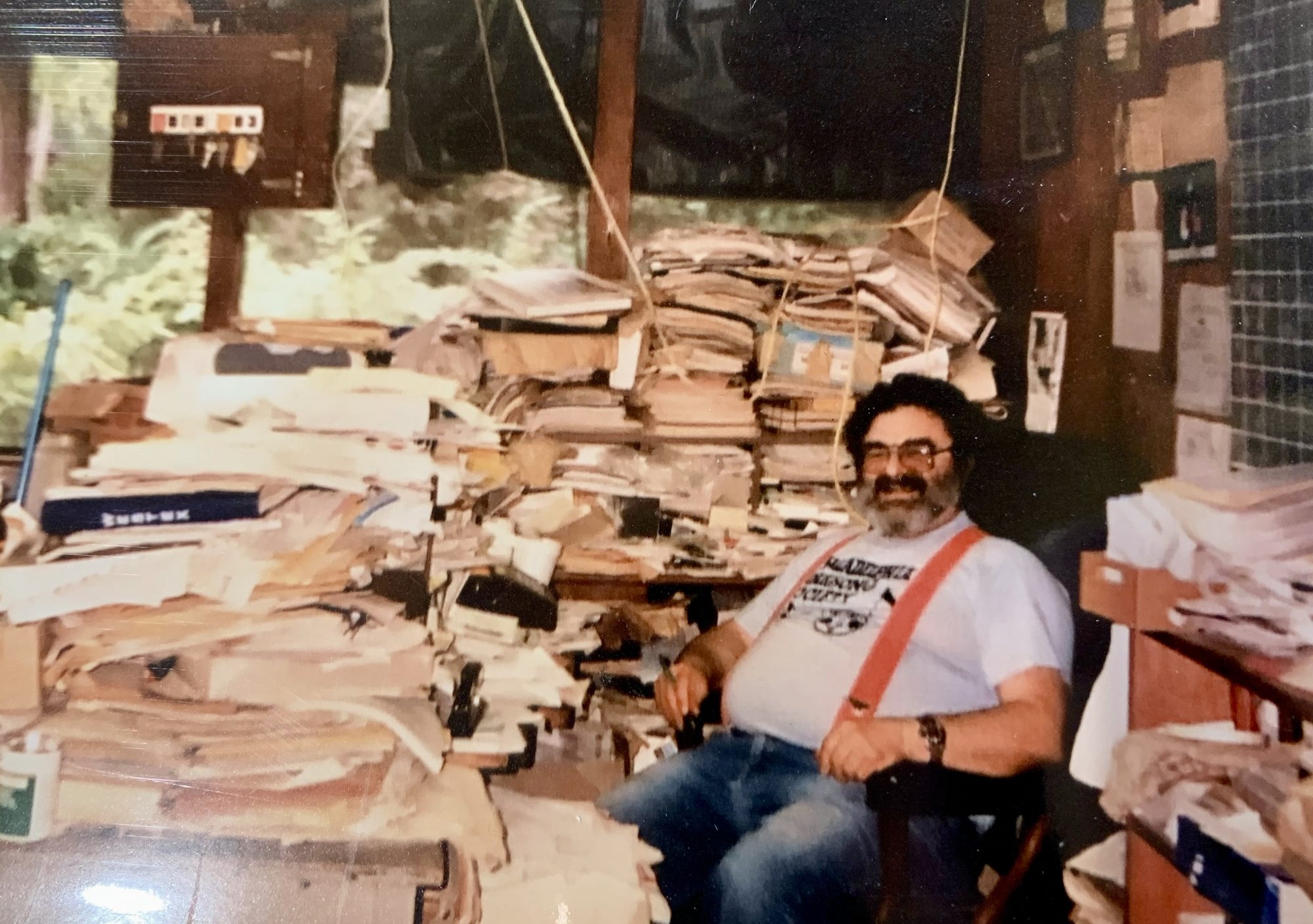
By the time I became the director of Pinemere in 1999, though, we were finally ready to enter the 20th century, just in time for the arrival of the 21st.
A willingness to mess around
Over the next couple of decades, I became increasingly interested in the ways technology could help us operate our camps. I helped build our first website, learned a little HTML, and eventually became reasonably comfortable working in WordPress. I liked being an early adopter of technology, particularly when I could see a practical application for the work we were doing.
We were among the early camps experimenting with online photo sharing for parents during the summer, initially with a company called I Love Camp and later with Bunk1. What seemed like a wonderful innovation at the time also introduced some interesting new challenges for camp directors. In August of 2013, when I was the director of Camp Harlam, I was interviewed by Amy Gamerman for a Wall Street Journal article about parents scrutinizing online camp photos. I had spent an additional $15,000 that summer to hire two more photographers and a communications coordinator, in part because parents were concerned that they weren’t seeing enough pictures of their children.
Reading that article now, I find it fascinating how much of what we were wrestling with in 2013 is still relevant today. We had embraced a technology that was supposed to make parents more comfortable sending their children away to camp, and in some respects, we had created an entirely new source of anxiety for them. I’ve always been enthusiastic about what technology can do for us, but my experiences as a camp director have also given me a healthy appreciation for what it can do to us. That’s a distinction that I think about quite a bit these days.
We also adopted web-based camp management software relatively early, first with EZ-CAMP and eventually with CampMinder, a company with which I’ve now had a relationship spanning roughly 20 years. The evolution of those products fundamentally changed the way we operated our camps, and I became increasingly interested not just in using the technology that was available to us, but in finding ways to build upon it.
Not all of my experiments were quite so successful.
I remember sitting at home one day reading The New York Times and learning about a platform called Ning, which allowed people to build their own Facebook-like social networks. I immediately saw the possibilities for creating an online community for our camp alumni and staff. I built one, launched it, and watched as almost nobody used it. I essentially orphaned the thing a year or so later.
But I had a great time building it.
And that was becoming a pretty consistent theme for me. I enjoyed the process of discovering a new tool, figuring out what it was capable of doing, and imagining how it might be applied to something in my own little corner of the world.
Over these last several years at Chestnut Lake Camp, I’ve probably saved us a fair amount of money by being able to manage aspects of our website myself. There are certainly people who are much better at it than I am, but there’s something I appreciate about being able to make a change when I want to make it without having to explain it to somebody else, wait for them to do it, and then explain why what they did wasn’t exactly what I had in mind.
One of the challenges of operating a summer camp is that, while we share an enormous number of common needs with other camps, we all have our own peculiar ways of doing things. The companies that build software for our industry have the unenviable task of trying to accommodate all of us. Even the very best products can’t necessarily do everything the way we’d like them to. And sometimes the things we need aren’t particularly complicated; they’re just specific to us.
A few years ago, I wanted to develop a better system for managing our camper care and wellness efforts at Chestnut Lake. I wanted our team to be able to document concerns, track interventions, communicate with one another, and follow issues through to their resolution. That’s when I discovered Airtable. Somebody spent a little time showing me how it worked, and before long, I had built a system that could do much of what I wanted it to do.
That experience introduced me to something called an API, which, for those who are as technically sophisticated as I was at the time, is essentially a means by which different software systems can exchange information. With the generous assistance of my friend and camp colleague Scott Black, and what I recall being a considerable investment in ice cream, I was eventually able to build a much more customized enrollment tracking system that allowed us to understand our availability right down to individual age groups and cabins.
None of these things made me a software developer. I wouldn’t have known how to build a conventional software application if my life depended on it. But I was getting pretty good at identifying problems, understanding how information needed to be organized, and finding ways to make technology do things that were useful to me and the people I worked with.
As it turns out, those were pretty valuable skills to have when the technology finally caught up with my ambitions.
Pickleball, of all things
In early April of 2026, I was helping to organize a Junior JCC Maccabi pickleball event in the Philadelphia area. Having recently developed a somewhat unhealthy obsession with pickleball myself, I was particularly excited about the opportunity to get involved.
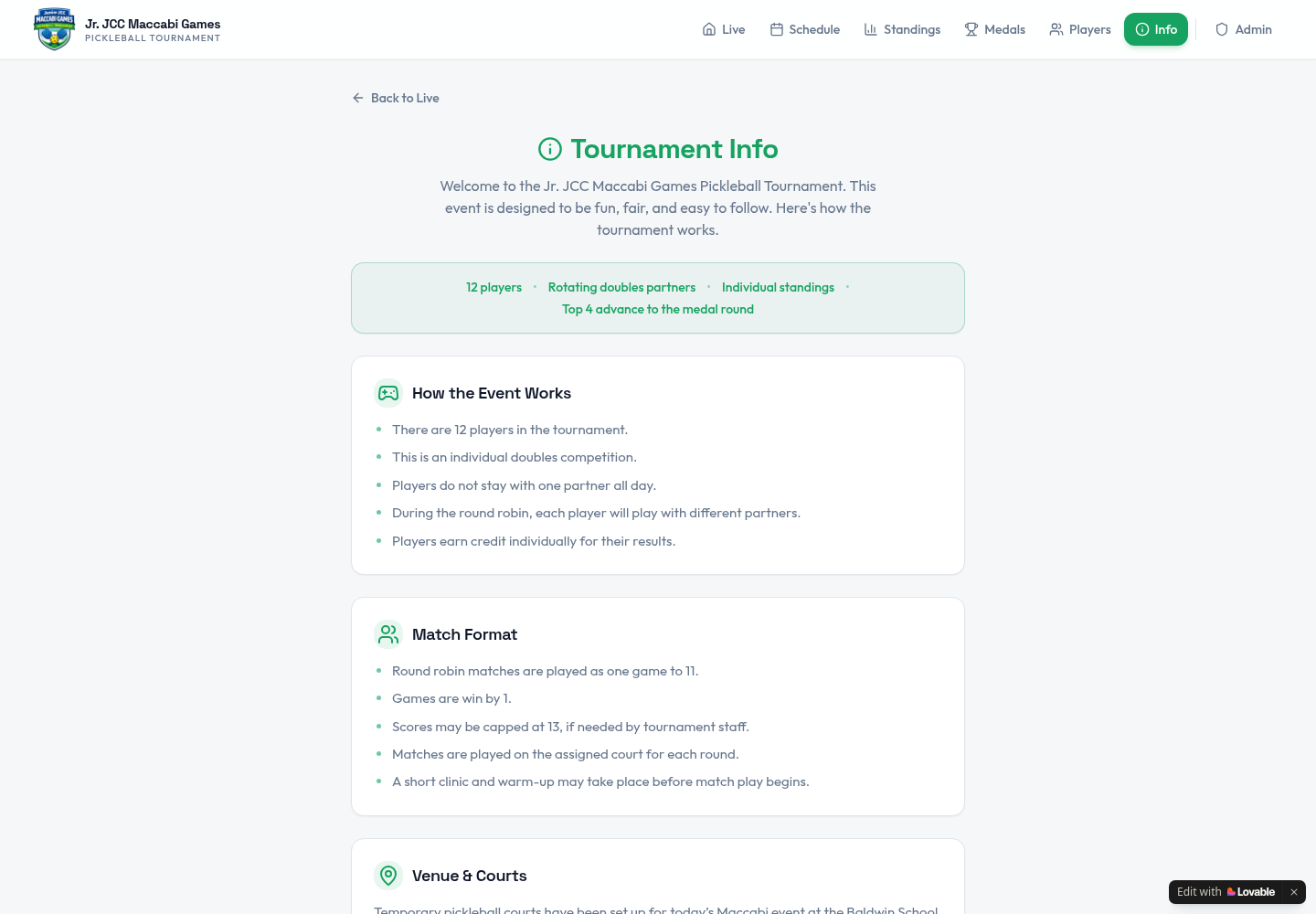
We had 12 players, rotating partners, a series of matches, and a championship round to manage. I wanted a system that would help us organize the tournament, enter scores from our phones, automatically calculate standings, and allow parents and coaches to follow along.
It was hardly the sort of problem that required a major investment in software development. But it gave me a reason to experiment with an AI-assisted application development platform called Lovable.
What I was able to build was pretty remarkable to me. It was a functioning, web-based application, accessible on people’s phones, built specifically for this little tournament. And I hadn’t needed to hire anybody to do it.
The significance of that experience had almost nothing to do with pickleball.
For years, I had been figuring out how to make existing software do what I wanted it to do. Now I was getting a glimpse of what it might be like to decide what I wanted software to do and then create it.
The timing turned out to be particularly good.
A little motivation
At about the same time, we were exploring a product called Camptivities to help us manage activity scheduling at Chestnut Lake.
Activity scheduling is an enormously complicated exercise at a camp of our size. On any given day, we need to account for hundreds of campers, multiple age groups, dozens of activities, facilities, specialty staff, individual preferences, and a seemingly endless set of rules and exceptions. And that’s all before it starts raining.
Camptivities had developed a sophisticated product to address many of these challenges, and I was impressed by aspects of what they had built. But I had reservations about the cost of the software, its pricing model, and some of its limitations, particularly around the way our staff would need to access it on their mobile devices.
In the course of an exchange with the company’s leadership, I raised some questions about the extent to which emerging technologies might change the economics of developing and delivering this kind of software. I had just started playing around with Lovable, and while I certainly wasn’t suggesting that my little pickleball application was comparable to a sophisticated scheduling engine, I was intrigued by what I had experienced.
An exchange with the company’s chief technology officer followed. He explained the complexity of what they had built and why developing a sophisticated scheduling system was a very different undertaking from building a relatively simple application with one of these emerging development tools.
He was right about the complexity of the problem. I’ve developed an even greater appreciation for that in the months since.
But I also came away from the exchange wondering whether he had underestimated what these new development tools might make possible, and perhaps what someone with a pretty intimate understanding of the problem might be able to do with them.
I suppose there was also a little bit of the ninth grader in me who liked being told that something would be difficult when it was something I actually wanted to do.
I’m not sure the folks at Camptivities intended to motivate me to build my own software, but they did a pretty good job of it.
And then came Campbase
I started trying to build an activity scheduling application for Chestnut Lake.
I wish I could tell you that I had some grand vision for what I was about to create. I didn’t. I wanted to make activity schedules.
But the experience of building that first application was unlike anything I had experienced in all of my years of messing around with technology. I could describe how our camp operated, explain the rules that governed our scheduling, identify exceptions, and articulate what I wanted our staff to be able to see and do. And then I could work with the technology to build it.
When something didn’t work, I could work through the problem, make adjustments, and try again. When I thought of something else that would be helpful, I could add it.
It wasn’t quite as easy as that description might suggest. There were plenty of mistakes, frustrating stretches, things I had to rebuild, and an almost embarrassing number of hours devoted to the project. I also began to discover how easy it was to fix something in one part of an application and inadvertently break three other things that had been working perfectly well.
But I was having an absolute ball.
“I wish I could tell you that I had some grand vision for what I was about to create. I didn’t. I wanted to make activity schedules.”
And, as anyone who works at a summer camp knows, activity scheduling doesn’t exist in isolation. If you know where the campers are supposed to be, it would be pretty helpful to know where the staff are supposed to be, too. And if you’re scheduling staff, you probably want to account for their days off, their evening responsibilities, and their other assignments. And if you’re already managing all of that information, wouldn’t it be nice to have a better way of communicating it to everyone who needs it?
One thing led to another. And then another. And then about 50 other things.
The activity scheduling application began to incorporate individual camper elective preferences, facility availability, staff assignments, and the various rules that determine whether a schedule is actually a good one. I built tools for managing our staff schedules and days off, coordinating evening responsibilities, maintaining a master calendar, and producing daily briefings for our leadership team. I started to connect some of these systems so that information entered in one place could be useful somewhere else.
One of the things I found most satisfying was being able to build around the language and practices of our camp. Our staff didn’t need to learn somebody else’s terminology or change the way we did something simply because that was how a piece of software had been designed. We could build the software around how we operated.
And we could change how we operated when the process of building the software helped us recognize that we ought to.
We started using what I had built during the summer of 2026, which gave me the opportunity to do something even more valuable than building software: watch actual camp people try to use it.
There is nothing quite like a few hundred campers and staff members going about their business at a summer camp to expose the flaws in something you’ve designed while sitting comfortably at your kitchen table.
The summer gave us a chance to learn what worked, what didn’t, what our staff actually needed, and what I had never even thought to consider. There was something particularly gratifying about being able to make adjustments to the software while we were actually using it at camp.
Since the summer ended, the project has continued to grow considerably. It now has a name, Campbase, and it has become a collection of interconnected tools that address a fairly wide range of our operational needs. Some are quite sophisticated. Others are relatively simple solutions to little problems that have been annoying us for years.
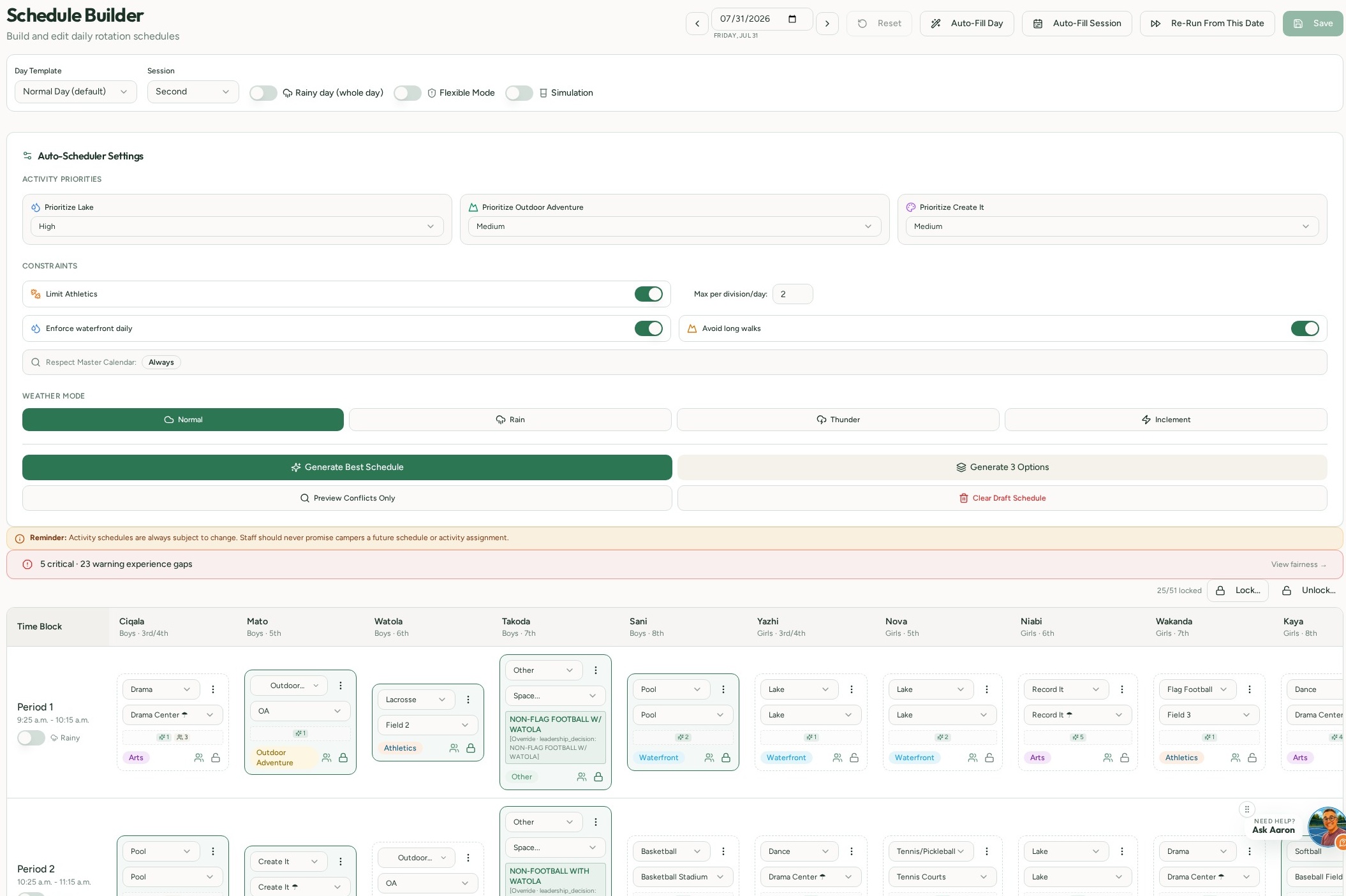
In addition to all of the scheduling functionality, we’re now working on better ways to manage everything from camper phone calls, trips, and vehicle usage to specialty programs, staff financial information, family tours, parent communications, and the relationships we have with our referral partners.
I don’t see Campbase as a replacement for all of the other technology we use. We’re a CampMinder camp, and we continue to benefit enormously from what they and other companies have built for our industry. Much of what I want Campbase to do is complement those systems, connect information in useful ways, and address aspects of our operation for which we haven’t had particularly good solutions.
I also don’t think I’ve somehow circumvented the need for professional software developers. Building something that works for our camp and building a secure, reliable, scalable commercial product for hundreds of camps are two very different propositions. I’m learning enough about software development to have a much greater appreciation for the work that professional developers do.
I’m also learning enough to appreciate how much more I’m now capable of doing myself.
Why I care so much about this
I’ve spent much of my professional life trying to help camps become better at what they do. And while I certainly enjoy the operational side of running a camp, the things that matter most to me about this work have very little to do with operations.
I care about the relationships that develop between children and the people who take care of them. I care about the experiences that help kids discover things about themselves. I care about the development of young adults who come to work for us and learn how to be responsible for other human beings. I care about creating communities that have a lasting impact on the people who are part of them.
One of the great frustrations of being a camp director is how much time and energy can be consumed by the mechanics of making all of that possible. There are spreadsheets to maintain, schedules to create, assignments to communicate, information to track down, and countless little administrative tasks that need to get done. Much of that work is necessary, but very little of it is why any of us got into this business.
We also tend to develop systems at camp that are incredibly dependent on particular people. Somebody has a spreadsheet that only they really understand. Somebody else knows how we did something last summer. There are pieces of information that live in somebody’s email, on a clipboard somewhere, or in the head of a staff member who may or may not be coming back next year.
These aren’t necessarily indications of a poorly run camp. They’re often a reflection of the resourcefulness of really good camp people who have figured out how to get things done with the tools available to them. But there ought to be some better ways to support those people.
What excites me about Campbase is the possibility of giving some of their time back to them. If we can make it easier for a division leader to get the information they need, for a program director to make an adjustment to a schedule, or for a member of our leadership team to understand what’s happening across camp without having to consult six different sources, perhaps those people can spend a little more of their day doing the things we actually hired them to do.
And if we can preserve some of the institutional knowledge that makes our camps function well, perhaps we can also do a better job of preparing the people who will eventually take on those responsibilities.
“There’s something particularly satisfying about using increasingly sophisticated technology to help us create an experience for children that is largely free of it.”
There’s something particularly satisfying about using increasingly sophisticated technology to help us create an experience for children that is largely free of it.
What happens next?
I really don’t know.
I’ve had some wonderfully encouraging conversations with people in the camp industry, including people at CampMinder and Campfront who have spent a considerable amount of time thinking about the intersection of technology and summer camp. Their willingness to look at what I’ve built, offer their perspectives, and recognize some of its potential has meant a great deal to me.
We’re also beginning the process of adapting Campbase for use at our sister camp, Trail’s End, which will be a fascinating opportunity to learn how much of what I’ve built is unique to Chestnut Lake and how much of it might be valuable in a different camp environment. I’m particularly interested in seeing what happens when really good camp people who operate a camp somewhat differently than we do become part of the development process.
Could Campbase eventually be something that other camps use? Perhaps. There are a lot of things to consider before going down that road, and I’m not in any particular hurry to figure all of that out.
If the only thing that ever comes of this project is that we have a really good set of tools that help us run Chestnut Lake Camp more effectively over the next several years, I will consider it an enormous success.
Part of what has been so interesting to me about this experience is that, for all of the attention being paid to artificial intelligence and what it might mean for our professional lives, I think the most valuable thing I’ve brought to this endeavor is my experience as a camp director. The technology doesn’t know our camp the way I do. It doesn’t understand why we do certain things, which exceptions to a rule are important, or what a division leader needs to know at a particular moment in the day. Much of what makes Campbase useful is the accumulation of things that I’ve learned, often the hard way, over the course of more than three decades of doing this work.
I now have a means of doing something different with some of that knowledge.
And I’m enjoying the experience of being a student again. At 56, I’m learning things every day that I couldn’t have imagined knowing how to do even a year ago. I’m making mistakes, discovering new things, getting excited about possibilities, and occasionally staying up much later than a person my age probably should because I want to figure something out before I go to bed.
My parents would have been thrilled to see me apply this kind of enthusiasm to my schoolwork in ninth grade.
It took me a while.